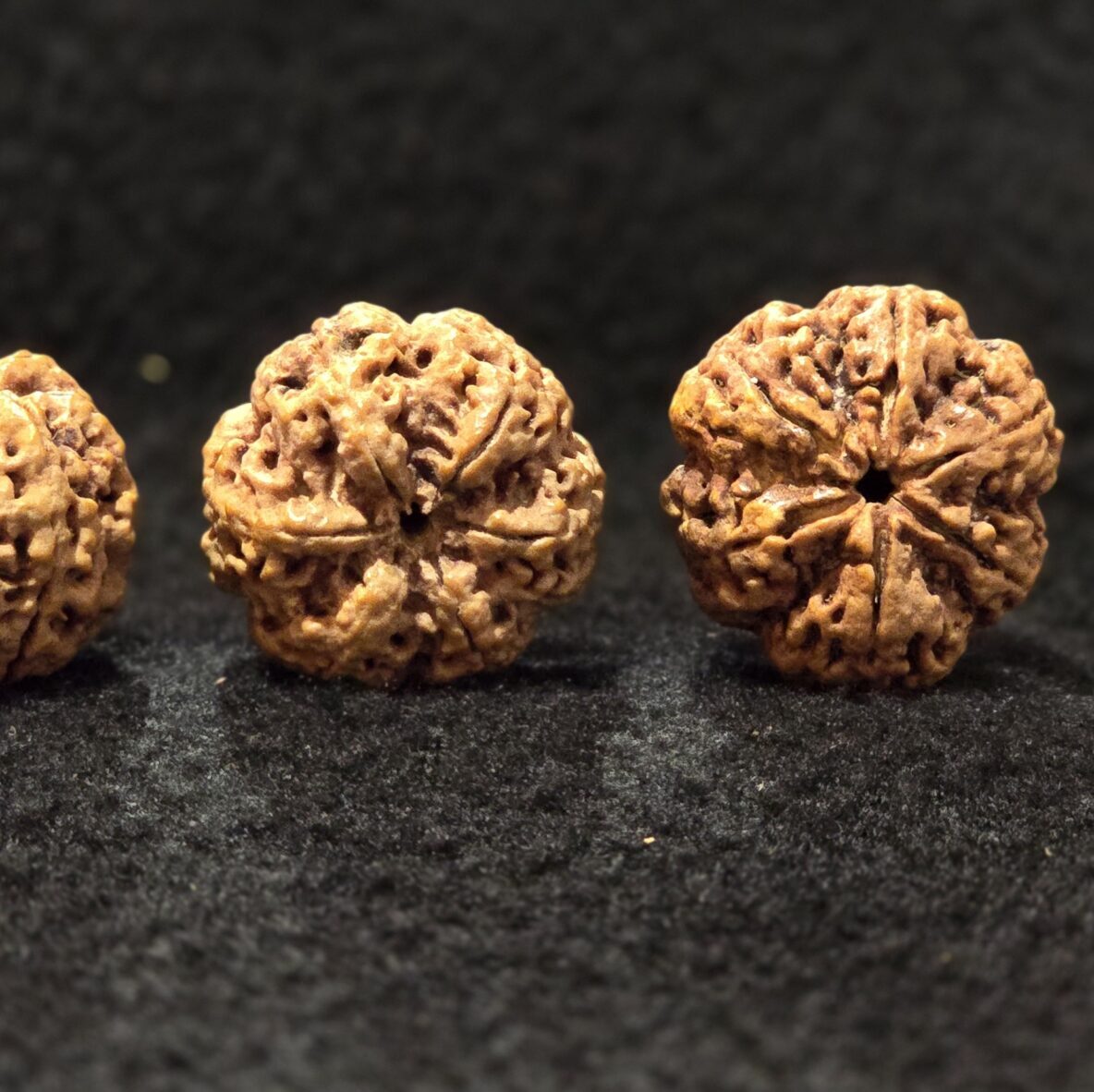
Culture of Rudraksha

भक्तानां धारणात्पापं दिवारात्रिकृतं हरेत् ।
लक्षं तु दर्शनात्पुण्यं कोटिस्तद्धारणाद्भवेत् ॥ ४ ॥
bhaktaanaam dhaaraNaatpaapam divaaraatriKritam haret
laksham tu darshanaatpuNyam koTistaddhaaraNaadbhavet
This Rudraksha destroys the devotees’ sins that are committed both night and day, by wearing it.
By mere vision of the Rudraksha, the benefit will be say, a lac. But by wearing them, it will be a crore. [1]
Rudraksha beads have a rich history that dates back thousands of years, deeply rooted in ancient Hindu scriptures and texts. Various scriptures describe the various types of Rudraksha beads, their significance, and the benefits of wearing them.
The mythology surrounding Rudraksha beads is rich with fascinating stories and legends. From Shiva’s consciousness transforming into compassion for humanity, to the simultaneous experience of joy and suffering during moments of triumph and poignancy, Rudraksha stands as the earthly embodiment of Shiva.
In addition to these legends, there are numerous stories from various regions and cultures that emphasize the miraculous and healing properties of Rudraksha beads. These stories have been passed down through generations, adding to the mystique and reverence surrounding Rudraksha.
The historical significance of Rudraksha beads extends beyond mythology and religious texts. Archaeological evidence suggests that Rudraksha beads have been used for thousands of years in various cultures and civilizations. Ancient artifacts and relics featuring Rudraksha beads have been discovered in regions such as India, Nepal, and Indonesia, indicating their widespread use and importance. [2]
In ancient India, Rudraksha beads were worn by sages, saints, and spiritual practitioners as a symbol of their devotion and spiritual discipline. These beads were believed to enhance meditation, provide protection, and promote spiritual growth. The use of Rudraksha beads was not limited to religious practices; they were also used in traditional medicine for their healing properties.
The significance of Rudraksha beads continued to evolve over the centuries. During the medieval period, they became an important part of the spiritual and cultural fabric of India. Kings and warriors wore Rudraksha beads for protection and strength, while scholars and philosophers used them to enhance their intellectual and spiritual pursuits.
In modern times, Rudraksha beads have gained global recognition for their spiritual and healing properties. They are used by people from various walks of life, including spiritual seekers, health enthusiasts, and those looking for a deeper connection to their inner selves. The enduring legacy of Rudraksha beads is a testament to their timeless appeal and significance.
Numerous texts have explored the origin, significance, uses, and benefits of Rudraksha beads and malas. Some texts provide detailed information about the color, texture, faces, number, and importance of each type of Rudraksha. While a whole chapter in the appendices of this book is dedicated to some of the most important scriptures about Rudrakshas, presented in their entirety with translation, interpretation, and explanation, the following is a synopsis of each, highlighting their different perspectives and mythologies.
[1] A verse from the Rudraksha-Jabala-Upanishad of the Sama-veda. Lac means one hundred thousand while crore means ten million. (Details in Chapter: Scriptures)
[2] The author obtained oral information regarding the origin and archaeological discovery of Rudraksha, in Sankhuwasabha, Nepal and Varanashi, India. However, the author was not able obtain any significant scientific investigation that has a recorded data in this matter.
No responses yet